That’s where a dedicated PPC company provides comprehensive PPC advertising solutions tailored to your unique needs. Still, as a business, you need at least a basic understanding of PPC and its utilization. This article will show you how to run a successful PPC advertising campaign. Let’s get started.
What is PPC?
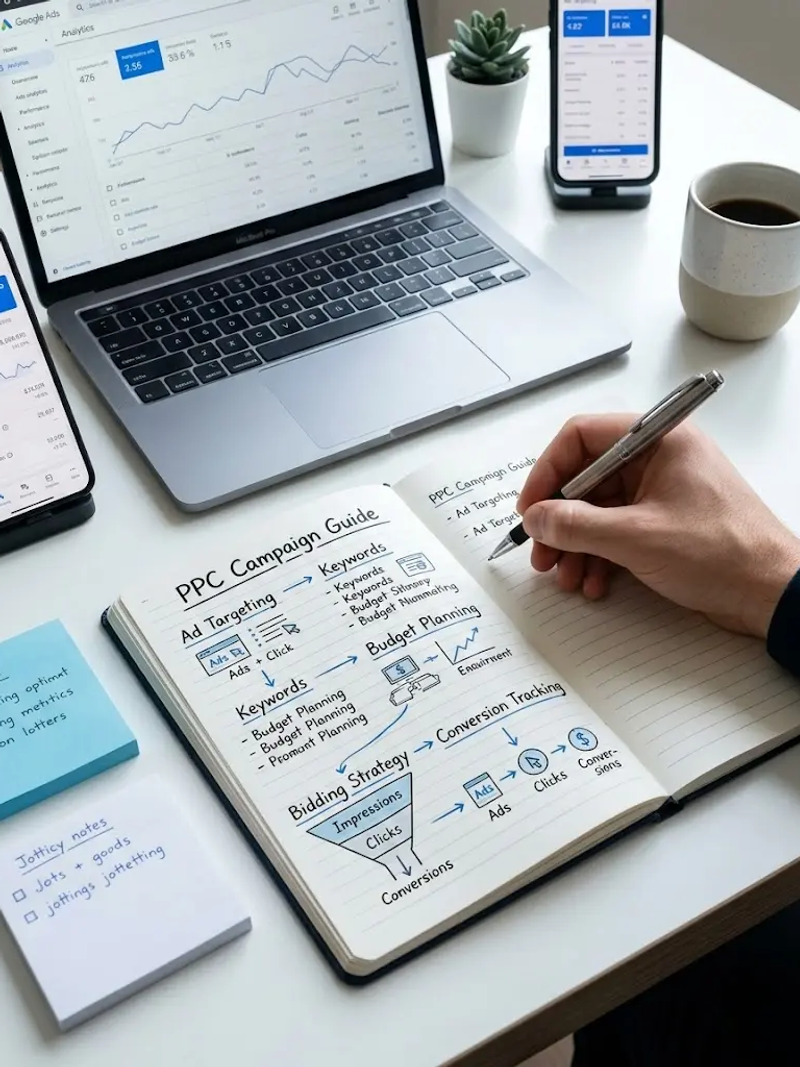
Pay-per-click (PPC) is an advertising model that enables businesses to pay to have their website listed on search engine results pages (SERPs) when users search for specific phrases or keywords. The ads you create appear in search results, and you pay only when someone clicks on your advertisement.
PPC is all about relevance. People search for certain products, services, or information at any given time, and advertisers can display targeted ads precisely when those searches occur. For example, if someone searches for “white polo t-shirt” on Google, advertisers can display an ad related to “shirts for men.”
With proper targeting settings and account structure, advertisers can run highly relevant PPC campaigns.
PPC ads are most commonly seen on search engines like Google or Bing, but they are also used on social media platforms (although CPM models are more common there).
Unlike SEO, which may take months to generate results in competitive industries, PPC advertising can generate immediate traffic once campaigns are funded and launched.
Additionally, PPC strategies can support SEO efforts by helping businesses gain quick visibility while building long-term organic reach.
Why Hire a PPC Marketing Agency?
PPC advertising is crucial for any successful digital marketing strategy. PPC services offer strong control over advertising budgets, allowing businesses to reach potential customers exactly when they are searching for relevant products or services.
Unlike many marketing tactics, PPC delivers instant results. Traffic and conversions can begin as soon as campaigns go live, making PPC valuable for businesses that want quick traction or need to promote time-sensitive offers.
With the right PPC strategy, businesses can achieve marketing goals and drive sustainable growth.
Key Benefits of Hiring a PPC Agency
✔ PPC marketing offers advanced targeting capabilities based on demographics, location, interests, and search intent, ensuring efficient budget utilization and higher ROI.
✔ A professional PPC management service optimizes campaigns by analyzing data, refining keywords, and adjusting bidding strategies for maximum performance.
✔ PPC services provide valuable analytics and audience insights, helping businesses understand user behavior and improve marketing strategies.
Incorporating PPC into your marketing strategy is essential for staying competitive. By leveraging the expertise of a professional PPC company, businesses can unlock new growth opportunities and achieve their objectives more effectively.
Working with a skilled PPC marketing agency also helps businesses stay ahead of competitors and adapt quickly to changing market trends.
Types of PPC Ads
When running a PPC campaign, multiple ad formats are available depending on the platform.
Search Ads
Search ads appear on search engine results pages when users search for relevant keywords. These ads target audiences actively looking for products or services and provide immediate visibility.
Display Ads
Display ads are banner or image ads shown across websites within networks such as the Google Display Network and partner sites. They can appear at the top, bottom, or side of webpages and are commonly seen on news websites.
Video Ads
Video ads appear across the internet and on platforms such as YouTube. One common format is pre-roll ads, which play before the video content a user wants to watch.
Best Practices for a Quality PPC Strategy
Create Strong PPC Advertising Copy
Targeted keywords place ads in front of the right audience, but compelling ad copy drives clicks.
Ask questions such as:
- What is the customer’s biggest pain point?
- What motivates them to purchase?
- How does your product solve their problem?
Search ads typically include headlines, URLs, and descriptions with character limits. To maximize performance:
✔ Address your target audience directly
✔ Include the keyword you are bidding on
✔ Use a strong call-to-action (CTA)
✔ Highlight compelling offers
✔ Maintain consistent messaging with landing pages
✔ Conduct A/B testing
Optimize Your Landing Page
After ad copy, the landing page is the most critical component of PPC success. The page must align with the advertisement and provide a seamless user experience.
A high-converting landing page can also improve Quality Score and ad performance.
Essential landing page elements:
✔ A compelling headline matching the ad
✔ Clean design and layout
✔ Easy-to-use forms with strong CTA buttons
✔ Relevant, keyword-focused content
✔ Clear offer presentation
✔ A/B testing for optimization
Poor landing pages can significantly reduce PPC performance.
A/B Test Your PPC Ads
Testing is essential for improving click-through rates and conversions. The main components to test include:
- Headlines
- Descriptions
- Landing pages
- Keywords
Make one change at a time to identify what improves results. Allow campaigns to run long enough to gather meaningful data before making decisions.
Additional PPC Tips and Tricks
Target the Right Audience
Google Ads allows detailed audience targeting to improve efficiency. Options include:
- Customer lists
- In-market audiences
- Audience layering
These tools ensure ads reach users most likely to convert.
Modify Your Bidding
Bid adjustments allow you to increase or decrease bids based on performance factors such as:
- Device type
- Demographics
- Location
- Language
For example, if mobile conversions are lower than desktop, bids can be reduced for mobile traffic.
Custom Ad Scheduling
Ads can be scheduled to appear only during specific days or times, reducing wasted spend and improving ROI.
Use Sitelink Extensions
Sitelink extensions add extra information and links to ads, improving visibility and click-through rates while increasing Ad Rank.
Track Conversion Rates
Conversion tracking measures landing page performance using tracking codes, typically placed on thank-you pages. This data helps optimize campaigns for better results.
Monitor Keyword Performance
Regularly evaluate keyword performance to increase bids on high-performing terms and remove underperforming ones.
Choose Match Types
Google Ads offers several match types:
- Broad match
- Modified broad match
- Phrase match
- Exact match
These determine how closely search queries must match your keywords.
Use Negative Keywords
Negative keywords prevent ads from appearing in irrelevant searches, saving budget and improving targeting efficiency.
Social Media PPC Advertising
Social media platforms also offer PPC advertising, allowing advertisers to bid for ad placements based on budgets.
Social PPC offers advanced demographic targeting and features such as:
- Retargeting audiences
- Lookalike audiences
- Multiple ad formats (text, images, videos)
These tools help expand audience reach and improve campaign effectiveness.
Monitor and Manage PPC Performance
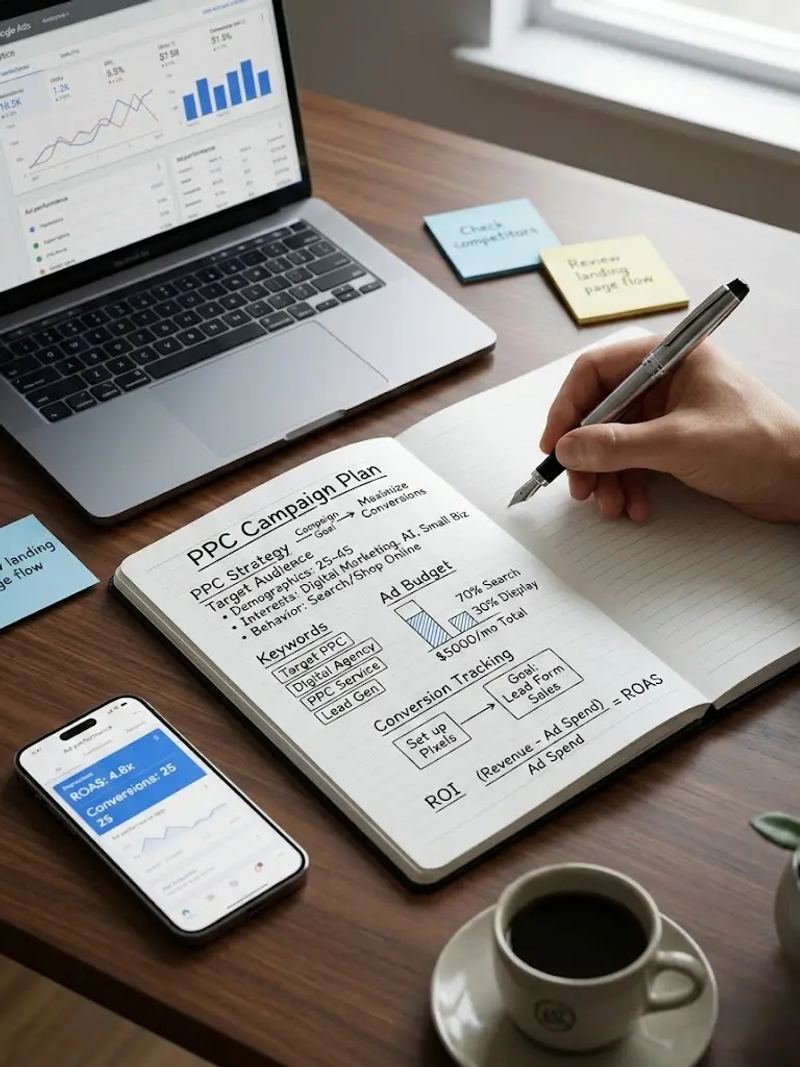
PPC campaigns require continuous monitoring and optimization. Analysis and tracking provide insights that help improve campaign performance and ROI.
Creating a PPC Campaign with Google Ads
The process of creating a PPC campaign in Google Ads includes the following steps:
1. Set Up an Account
Create a free Google Ads account using your email and password.
2. Select Your Goal and Campaign Type
Choose a campaign objective and type, such as:
- Search
- Display
- Video
- Shopping
- App
You can also create a campaign without goal guidance for full control.
3. Choose a Bidding Strategy
Decide how much you want to pay per click and set a maximum CPC limit. This can be adjusted later based on ROI.
4. Configure Campaign Settings and Targeting
Set:
- Location targeting
- Language preferences
- Start and end dates
- Network options
5. Add Keywords and Ad Assets
Research keywords and organize them into clusters or ad groups. Tools like Semrush can assist with keyword research.
6. Create Ads
Enter:
- Final URL
- Display path
- Headlines
- Descriptions
Ensure ads are engaging and optimized for performance.
7. Set Your Budget
Determine a daily budget based on your monthly advertising budget divided by 30.4.
8. Review Your Campaign
Google provides an optimization score and campaign overview. Review settings, ads, and keywords before launching.
Once approved, ads can go live within minutes or hours.
PPC Marketing Tips for Better Results
Set Up Negative Keywords
Use search term reports to identify irrelevant keywords and add them to negative keyword lists to reduce wasted spend.
Try Different Bidding Strategies
Experiment with automated bidding strategies to maximize conversions within your budget.
Optimize Your Ad Copy
Regularly update ad copy to allow Google to test variations and improve performance.
Analyze Competitor Ads
Studying competitor ads helps identify effective messaging and keyword strategies.
Use Ad Scheduling
Adjust bids based on time-of-day performance to focus on high-conversion periods.
Use Additional Ad Assets
Ad assets (extensions) provide extra information such as:
- Location details
- Lead forms
- Sitelinks
These improve visibility and click-through rates.
Use Bid Adjustments
Adjust bids based on device, time, and audience performance to improve efficiency.
Use PPC Tools
Third-party PPC tools help plan campaigns, analyze competitors, and optimize performance.
Conclusion
Getting started with PPC advertising is relatively simple, but maximizing campaign effectiveness requires data-driven decisions and continuous optimization. Research tools can help identify competitors, analyze strategies, and improve performance.
If you need help creating a PPC marketing campaign, connect with us here.